
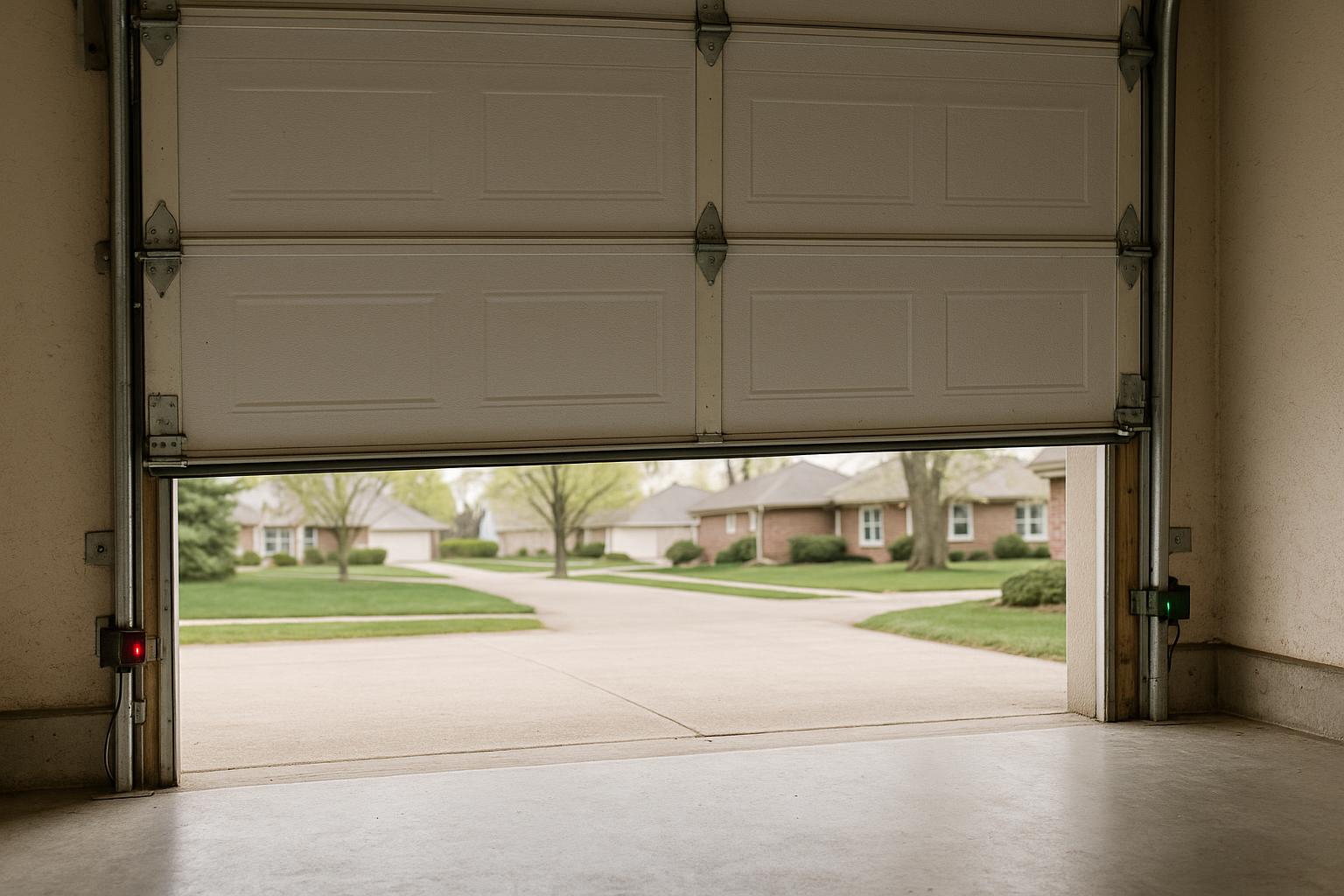
A Common and Frustrating Garage Door Problem
You press the button on your garage door remote, the door starts coming down, and then — just before it reaches the floor — it reverses and goes right back up. You try again. Same thing. Maybe it works on the third try, maybe it doesn't. Either way, you're left standing in your driveway wondering what's going on.
This is one of the most common garage door complaints we hear from homeowners in Troy, MO and the surrounding Lincoln County area. The good news is that the cause is usually identifiable and fixable. The bad news is that ignoring it can lead to bigger problems down the road, including a door that stops working entirely or becomes a safety hazard.
Let's walk through the most likely reasons your garage door reverses before closing and what you can do about each one.
1. Misaligned or Dirty Safety Sensors
This is the number one cause of a garage door that won't close all the way. Every garage door opener manufactured after 1993 is required to have photo-eye safety sensors mounted near the bottom of the door tracks on either side. These sensors send an invisible beam across the opening. If something breaks that beam — a child, a pet, a trash can — the door automatically reverses to prevent injury or damage.
The problem is that these sensors can become misaligned from a bump, vibration, or even temperature changes. They can also get dirty from dust, cobwebs, or moisture. When the sensors can't communicate properly, your opener interprets it the same way it would an obstruction: it reverses the door.
What to check:
- Look at the LED lights on each sensor. Both should be lit — typically one green and one amber. If one is blinking or off, the sensors are misaligned.
- Wipe the sensor lenses with a clean, dry cloth.
- Make sure nothing is blocking the path between the two sensors.
- Check that the sensors are firmly mounted and pointing directly at each other.
If cleaning and adjusting doesn't solve the problem, the wiring or the sensors themselves may need to be replaced. That's a quick fix for a professional but can be tricky for a DIYer unfamiliar with opener wiring.
2. Incorrect Close-Limit Settings
Your garage door opener has limit settings that tell it how far the door should travel before it's considered fully open or fully closed. If the close-limit setting is off, the opener may think the door has hit an obstruction when it's actually just reaching the floor. In response, it activates the auto-reverse function.
This often happens after a new opener installation, a spring replacement, or even seasonal temperature swings that cause the metal tracks and hardware to expand or contract slightly. Homeowners in areas like Troy and Foristell, where we see real temperature variation between summer and winter, sometimes notice this issue popping up with the change of seasons.
What to do:
Most openers have limit adjustment screws on the back or side of the motor unit. Consult your owner's manual for the specific location and adjustment procedure. Small adjustments — usually a quarter turn at a time — can make a big difference. If you're not comfortable making this adjustment yourself, it's a standard part of any garage door maintenance visit.
3. Worn or Broken Springs
Your garage door springs do the heavy lifting — literally. They counterbalance the weight of the door so the opener doesn't have to work as hard. When springs wear out or break, the door becomes significantly heavier. The opener struggles to control the door's descent, and the force required to close it may trigger the auto-reverse safety feature.
If you hear a loud bang from the garage, notice the door feels unusually heavy when you try to lift it manually, or see a gap in one of the torsion springs above the door, you likely have a broken spring.
Important: Spring replacement is not a DIY job. Garage door springs are under extreme tension and can cause serious injury if handled improperly. This is a repair that should always be left to a trained technician. Our team handles spring replacements throughout Troy, Moscow Mills, Winfield, and the rest of the area on a regular basis, and we always recommend calling a professional for this one.
4. Problems with the Tracks or Rollers
Bent tracks, worn rollers, or debris in the track channels can all create resistance as the door moves. If the opener encounters more resistance than expected during closing, it may interpret that as an obstruction and reverse.
Signs to look for:
- Visible bends or dents in the metal tracks
- The door wobbles, jerks, or makes grinding noises during operation
- Rollers that appear cracked, chipped, or no longer spin freely
- Debris like leaves, dirt, or small objects caught in the tracks
You can carefully clean the tracks with a damp cloth and inspect for obvious damage. However, bending tracks back into alignment or replacing rollers typically requires professional tools and experience to do safely and correctly.
5. The Opener Force Setting Needs Adjustment
In addition to limit settings, your opener also has force settings that control how much power it uses to open and close the door. If the closing force is set too low, the opener may not have enough power to push the door all the way to the floor, causing it to reverse.
Like the limit adjustment, force settings are usually controlled by screws or dials on the opener unit. Again, small adjustments are key — you don't want to crank the force up too high, as that can override the safety features designed to protect people and property.
When to Call a Professional
Some of these fixes — cleaning sensors, clearing debris from tracks — are reasonable for a handy homeowner to tackle. But if you've tried the basics and the door is still reversing, or if the issue involves springs, wiring, or opener adjustments you're not comfortable with, it's time to call in a professional.
At Troy Garage Door, we diagnose and fix reversing doors regularly for homeowners across Troy, Wright City, Hawk Point, and the surrounding communities. Most of the time, it's a straightforward repair that we can handle in a single visit. We'll identify the root cause, explain your options, and get your door closing properly again.
Don't Ignore a Reversing Garage Door
A door that won't close all the way isn't just annoying — it's a security risk. An open garage is an invitation for theft, pests, and weather damage. It can also put extra strain on your opener, shortening its lifespan and leading to more expensive repairs later.
If your garage door has been giving you trouble, don't wait for it to stop working completely. Give Troy Garage Door a call and let us take a look. We serve homeowners and businesses throughout Lincoln County, and we're committed to showing up on time and getting the job done right the first time.