
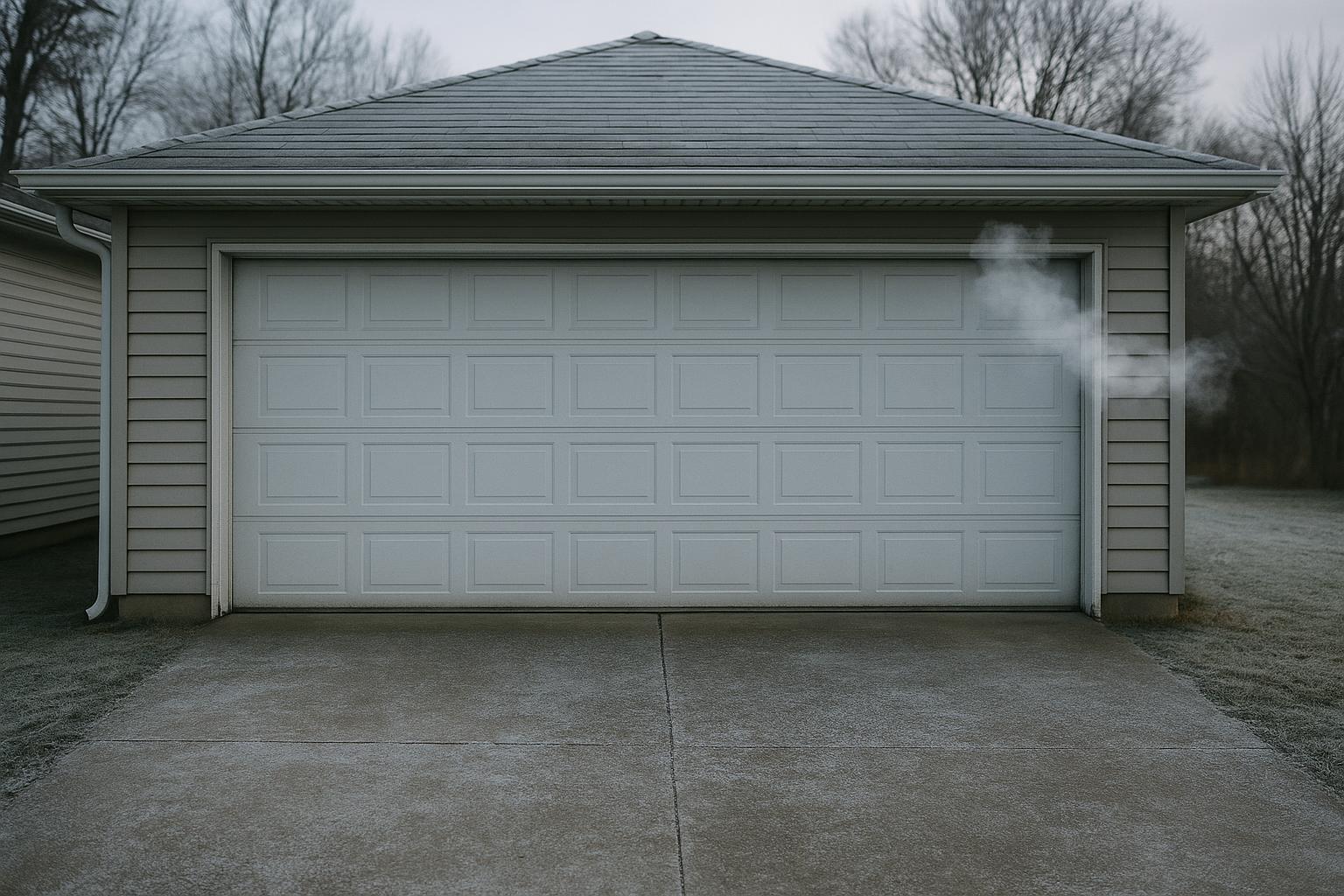
Why Cold Weather Wreaks Havoc on Garage Doors
If you've ever walked out on a frigid Missouri morning, pressed the button on your garage door opener, and heard the motor strain while the door refuses to budge, you're not alone. Cold weather garage door problems are one of the most common service calls we get at Troy Garage Door during the fall and winter months.
Freezing temperatures affect nearly every component of your garage door system — from the metal springs and tracks to the lubricant that keeps everything moving smoothly. Understanding why this happens can help you prevent a frustrating (and sometimes costly) breakdown when you need your garage door most.
Common Reasons Your Garage Door Won't Open in the Cold
1. The Weatherstripping Is Frozen to the Ground
This is the most frequent culprit. The rubber weatherstripping along the bottom of your garage door is designed to seal out drafts, moisture, and pests. But when temperatures drop below freezing, moisture between the seal and the concrete floor can freeze, essentially gluing your door to the ground.
If you try to force the door open — either manually or with the opener — you risk tearing the weatherstripping, damaging the bottom panel, or burning out your opener motor.
What to do: Gently tap along the bottom seal with a rubber mallet or use a heat gun on a low setting to melt the ice. You can also pour warm (not boiling) water along the seal to free it. To prevent this from happening again, apply a silicone-based lubricant or cooking spray to the bottom seal before freezing weather arrives.
2. Hardened or Thickened Lubricant
The grease and lubricant on your garage door's springs, rollers, hinges, and tracks can thicken or harden in cold temperatures. When this happens, the moving parts can't glide as freely, which puts extra strain on the opener motor and can cause the door to move slowly, jerkily, or not at all.
What to do: Switch to a lithium-based or silicone-based garage door lubricant, which performs much better in cold weather than standard grease. Apply it to the springs, roller bearings, hinges, and tracks. Avoid using WD-40 as a long-term lubricant — it's a solvent, not a true lubricant, and it can actually attract dirt and grime over time.
3. Contracted Metal Components
Metal contracts when it gets cold. This basic physics principle affects your garage door's springs, tracks, and hardware. Springs lose some of their tension when they contract, which can make it harder for them to lift the door. Tracks can shift slightly, causing alignment issues that make the door stick or bind.
What to do: If your door feels heavier than usual or seems off-balance, don't try to adjust the springs yourself. Garage door springs are under extreme tension and can cause serious injury. Call a professional to inspect and adjust the spring tension safely.
4. Misaligned or Blocked Safety Sensors
Your garage door opener has photo-eye safety sensors near the bottom of the door tracks. These sensors prevent the door from closing on people, pets, or objects. In winter, frost, condensation, snow, or ice can accumulate on the sensor lenses, blocking the beam and preventing the door from operating correctly.
What to do: Wipe the sensor lenses clean with a soft cloth. Check that both sensors are properly aligned — the indicator lights on each sensor should be steady, not blinking. Also clear away any snow, ice, or debris that may have accumulated around the sensors.
5. Dead or Weak Opener Batteries
Cold weather drains batteries faster than warm weather. If your wall-mounted keypad or remote control isn't responding, the batteries may simply be too weak to send a signal to the opener.
What to do: Replace the batteries in your remote and keypad. It's a good habit to swap in fresh batteries at the start of every winter season.
6. Stripped or Broken Garage Door Springs
Springs that are already nearing the end of their lifespan are especially vulnerable in cold weather. The added stress from metal contraction can push a weakened spring past its breaking point. If you hear a loud bang from your garage — almost like a gunshot — a spring has likely snapped.
What to do: Do not attempt to open the door manually or with the opener if a spring is broken. The door will be extremely heavy and dangerous to handle. Contact a garage door professional immediately for a spring replacement.
How to Winterize Your Garage Door
The best way to avoid cold weather garage door problems is to prepare before temperatures drop. Here in Troy, we typically start seeing freezing temperatures in late November, so early fall is the ideal time to winterize your garage door. Here's a quick checklist:
- Lubricate all moving parts with a cold-weather-rated silicone or lithium spray.
- Inspect the weatherstripping along the bottom and sides of the door. Replace any cracked, brittle, or missing sections.
- Test the door balance by disconnecting the opener and lifting the door manually to the halfway point. It should stay in place. If it doesn't, the springs need adjustment.
- Clean the safety sensors and make sure they're aligned.
- Tighten all hardware — bolts, brackets, and hinges can loosen over time from the vibration of daily use.
- Replace remote and keypad batteries before they die at the worst possible moment.
- Clear the area around the door of leaves, dirt, and debris that could freeze and cause blockages.
When to Call a Professional
Some cold weather garage door issues are easy DIY fixes — wiping off a sensor, replacing batteries, or applying lubricant. But others require professional attention. You should call a garage door technician if:
- A spring is broken or the door feels unusually heavy.
- The door is visibly off-track or crooked.
- The opener motor is running but the door isn't moving.
- You've tried basic troubleshooting and the door still won't operate.
- You notice frayed cables or damaged hardware.
Attempting to repair springs, cables, or track alignment without proper training and tools can result in serious injury or further damage to the door system.
Don't Let Winter Catch You Off Guard
A garage door that won't open on a freezing morning is more than an inconvenience — it can throw off your entire day and leave your home or vehicle exposed to the elements. Taking a little time to prepare your garage door for cold weather can save you from emergency repairs and unexpected expenses.
At Troy Garage Door, we help homeowners and businesses throughout Troy, Moscow Mills, Winfield, and the surrounding Lincoln County area keep their garage doors running reliably in every season. Whether you need a pre-winter maintenance tune-up, a spring replacement, or emergency repair on a cold morning, our team is here to help.
Give us a call to schedule a winterization service or to get fast, reliable help when your garage door isn't cooperating with the weather.