
The Short Answer
If you want your home to hold up in a wind storm, start with the garage door, not the roof. A standard residential garage door is the largest moving opening in most houses, and it's held in place by tracks, rollers, and springs rather than the solid framing that anchors a wall. When wind pressure gets behind a door that isn't reinforced, it can buckle, pop off its tracks, or blow in entirely — and once that happens, wind gets inside the house and pushes up on the roof from underneath. Reinforcing the door is one of the most cost-effective things you can do before storm season, and it's a lot cheaper than replacing a roof.
Why the Garage Door Is the Weak Point
Exterior walls are built from studs, sheathing, and fasteners spaced to resist lateral pressure. A garage door is a series of hinged panels held in a track by rollers, with the whole assembly counterbalanced by springs. None of that is designed to resist a sustained push from straight-line winds or a sudden pressure spike from a passing storm cell. Standard doors, especially older single-layer steel or wood doors without internal bracing, can flex and separate from the track under wind loads that a wall would shrug off without issue.
This matters more in this part of Missouri than in a lot of places, because Lincoln County sees real wind events on both ends of the calendar — fast-moving fall storm systems now, and a more active severe weather and tornado season again in spring. A door that survives a mild gust in July can still fail in a November squall line if it's never been reinforced or inspected.
Signs Your Door Isn't Ready
- Visible flex or bowing in the panels when wind pushes on the closed door.
- Loose or bent tracks, especially near the bottom where vehicles and foot traffic can nudge them out of alignment.
- Worn rollers or hinges that let the door rattle or shift side to side instead of running smooth and tight.
- No internal bracing on an older door — many builder-grade doors installed years ago were never fitted with horizontal struts.
- Springs that are tired or out of balance, which puts extra strain on the opener and track exactly when you need them to hold firm.
- Gaps around the perimeter where wind-driven rain is already getting in during ordinary storms.
Steps to Storm-Proof the Door You Have
You don't necessarily need a full replacement to improve how your door handles wind. Here's where to start:
1. Add or Upgrade Bracing
Horizontal strut kits, sometimes called hurricane braces, attach to the back of each panel and tie into the vertical tracks. They're a retrofit option for doors that were never built with wind resistance in mind, and they're far less expensive than a full door replacement.
2. Check and Tighten the Track System
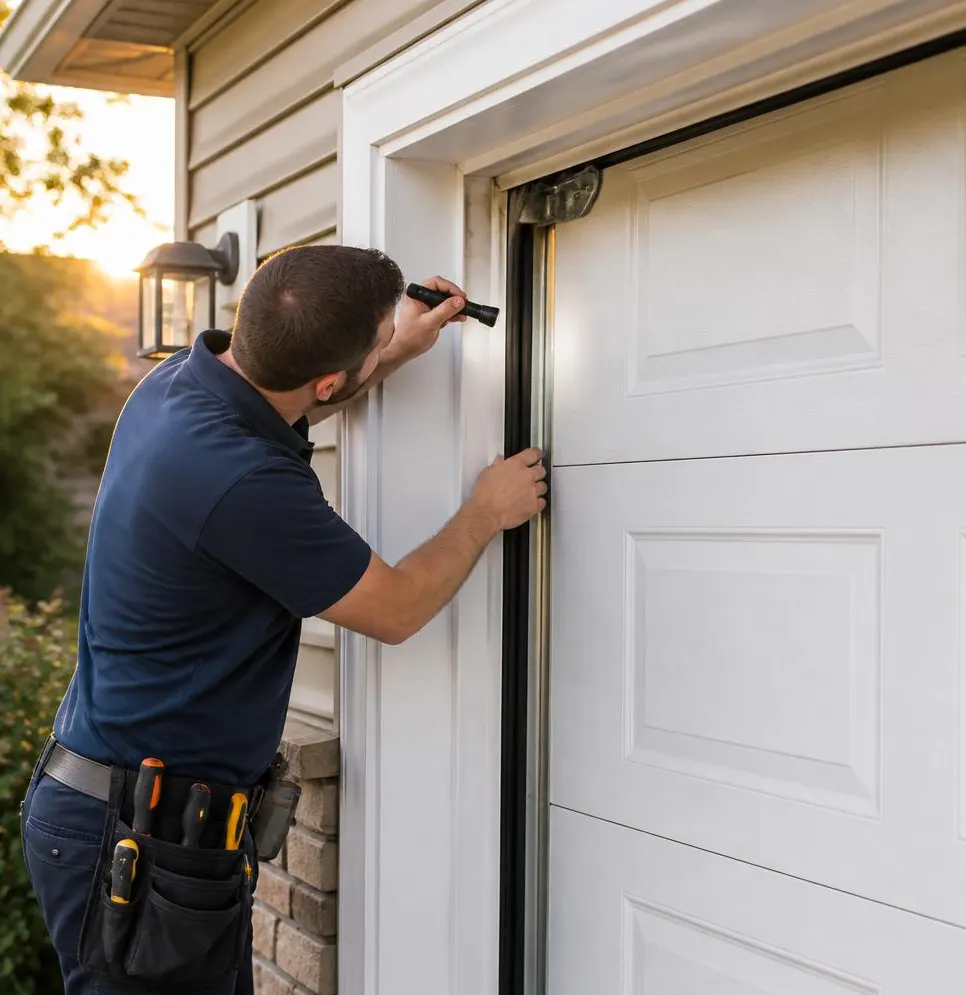
Tracks that are loose at the brackets or slightly bent will fail faster under pressure. Tightening lag bolts, replacing bent sections, and making sure the track is plumb gives the door a stronger connection to the structure of the garage.
3. Replace Worn Rollers, Hinges, and Cables
A door that rattles in normal operation has slack somewhere in the system, and slack means the door can shift more than it should when wind hits it. Nylon rollers and fresh hinges tighten everything up.
4. Rebalance or Replace Aging Springs
Springs that have lost tension force the opener to work harder and can let the door sag unevenly. A door that isn't sitting square in its frame has more gaps for wind and water to exploit.
5. Seal the Perimeter
Weatherstripping along the bottom and sides does double duty: it keeps wind-driven rain out during summer storms and reduces the gap wind can get a grip on during high-pressure events.
6. Consider a Wind-Rated Door If You're Due for Replacement
If your current door is old enough that repair doesn't make sense anymore, a wind-load-rated door is worth the upgrade cost. These doors use reinforced tracks, heavier gauge steel, and factory-installed struts rated for specific wind pressures. They cost more than a standard door — generally several hundred dollars more depending on size and rating — but for a home where the garage faces open fields or takes the brunt of prevailing wind, it's a trade-off that pays off the first time a real storm rolls through.
7. Don't Treat the Garage as a Storm Shelter
Even a reinforced door is not a substitute for an interior room with no windows or exterior walls. If severe weather or a tornado warning is issued, get away from the garage, not into it.
When to Call Troy Garage Door
If your door is flexing in the wind, running rough, or you're not sure whether it has any bracing at all, that's worth a look before the next storm front comes through, not after. Troy Garage Door can inspect the track, rollers, and springs as part of a Garage Door Maintenance visit, tighten or replace what's worn, and recommend a strut kit if your door can be reinforced in place. If the door is older, damaged, or simply undersized for the wind this area sees, we'll walk you through Garage Door Installation options, including wind-rated doors built for exactly this kind of weather.
Don't wait for the next storm warning to find out your garage door can't take the pressure. Call Troy Garage Door today and get your door storm-ready before the next front rolls through Troy, MO.