
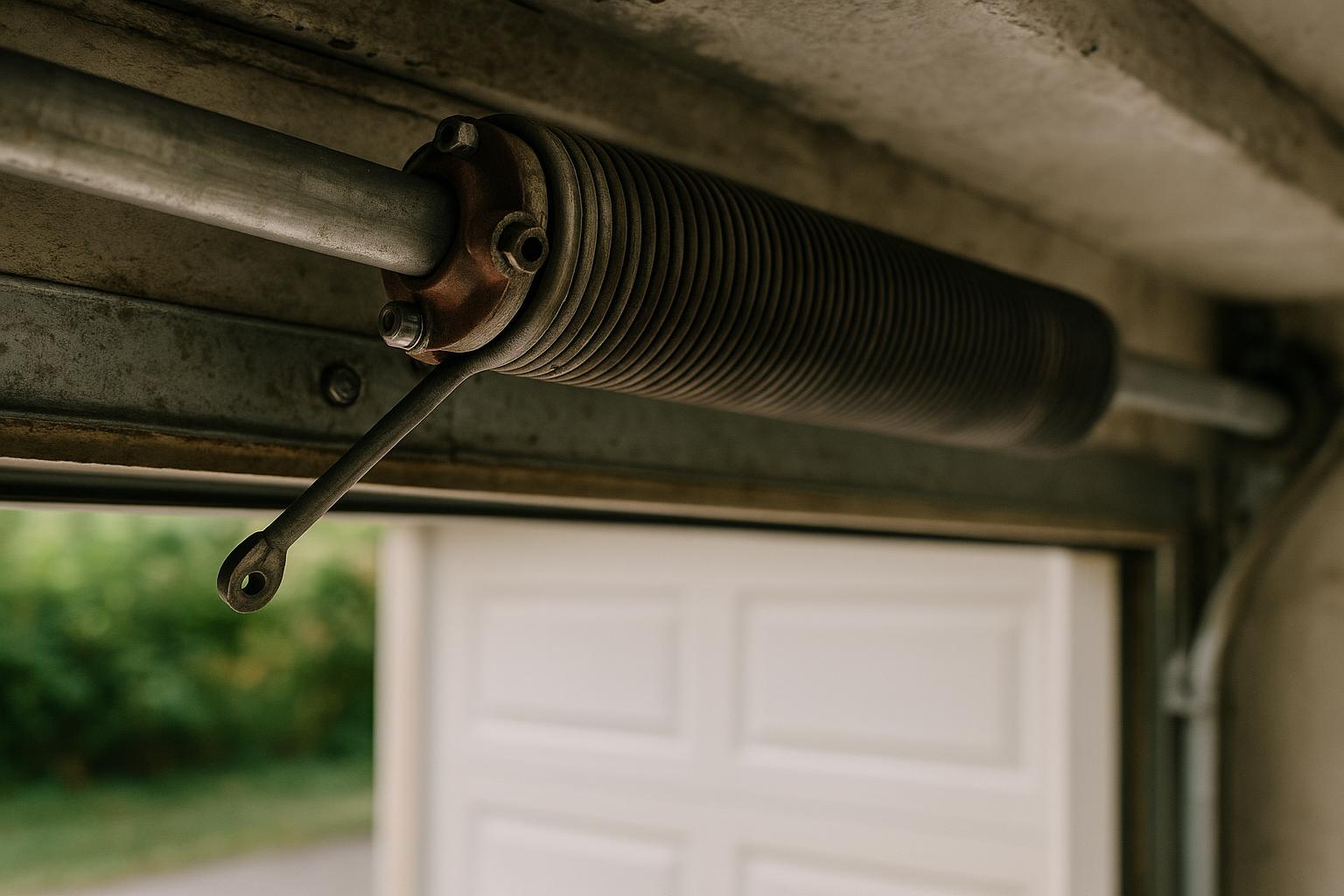
Your Garage Door Springs Are Doing More Work Than You Think
Every time you open or close your garage door, the springs are doing the heavy lifting — literally. A standard two-car garage door can weigh anywhere from 150 to 300 pounds, and without properly functioning springs, your opener alone can't handle that load. Springs are under extreme tension, and over time, they wear out. When they fail, your garage door becomes inoperable — or worse, dangerous.
For homeowners in Troy, MO, where temperature swings between summer heat and winter cold put extra stress on metal components, understanding your garage door springs is essential. Here's what you need to know about how long they last, what wears them out, and when it's time to call for a replacement.
How Long Do Garage Door Springs Typically Last?
Most standard garage door springs are rated for approximately 10,000 cycles. One cycle equals one full open and one full close. If your household opens and closes the garage door four times a day, that adds up to roughly 1,460 cycles per year — meaning your springs could last about seven to nine years under normal use.
However, several factors can shorten or extend that lifespan:
- Frequency of use: Families that use the garage as their primary entrance may cycle the door six to eight times a day, cutting the spring life significantly.
- Climate and temperature changes: Here in the Troy and Lincoln County area, cold winters cause metal to contract and become more brittle, while hot summers cause expansion. These repeated changes accelerate fatigue in the spring coils.
- Maintenance habits: Springs that are regularly lubricated and inspected tend to last longer than those that are neglected.
- Spring quality: Not all springs are created equal. Higher-cycle springs (rated for 20,000 or even 30,000 cycles) are available and may be worth the investment if you want to avoid frequent replacements.
Torsion Springs vs. Extension Springs: What's on Your Door?
There are two main types of garage door springs, and knowing which type you have helps you understand what to expect when it comes to replacement.
Torsion Springs
Torsion springs are mounted on a metal shaft directly above the garage door opening. They use torque to lift the door and are generally considered the more durable and safer option. Most modern garage doors in Troy use torsion springs, especially on heavier doors.
Extension Springs
Extension springs run along the horizontal tracks on either side of the door. They stretch and contract to provide lifting force. These are more common on older or lighter single-car garage doors. Extension springs typically include safety cables that prevent the spring from becoming a projectile if it snaps.
Both types wear out over time, but torsion springs tend to last longer and provide smoother, more balanced operation. If your home currently has extension springs and you're due for a replacement, it may be worth upgrading to a torsion spring system.
Warning Signs Your Garage Door Springs Need Replacement
Springs rarely fail without warning. Here are the most common signs that your springs are nearing the end of their life:
- The door feels unusually heavy: If you disconnect the opener and try to lift the door manually, a properly sprung door should feel light — almost weightless. If it's heavy and difficult to lift, the springs have lost tension.
- Visible gaps in the spring coils: A torsion spring that's about to break will often show a visible gap or separation in the coils.
- The door opens unevenly: If one spring is weaker than the other, the door may tilt or rise crookedly.
- Loud bang from the garage: Many homeowners in Troy have told us they heard a loud bang — like a gunshot — coming from the garage. That's often the sound of a spring snapping. If this happens, do not attempt to operate the door.
- The opener struggles or stops working: When springs fail, the opener has to work much harder. You may notice it straining, stopping mid-cycle, or refusing to open the door at all.
- The door slams shut quickly: Worn springs can't control the door's descent, leading to a door that drops faster than it should — a serious safety hazard.
Why You Should Never Replace Garage Door Springs Yourself
We understand the DIY spirit — it's strong in communities like Troy, Moscow Mills, and Wright City. But garage door spring replacement is one job that should always be left to a trained professional. Here's why:
- Extreme tension: Torsion springs are wound under tremendous force. A spring that releases unexpectedly can cause severe injury or even death.
- Specialized tools required: Proper replacement requires winding bars, clamps, and other tools that most homeowners don't have.
- Balancing matters: Springs need to be precisely calibrated to the weight of your specific door. An improperly balanced door wears out your opener faster and creates safety risks.
- Warranty concerns: DIY repairs can void the warranty on your door or opener.
At Troy Garage Door, our technicians handle spring replacements every week. We carry a range of spring sizes on our trucks so we can usually complete the job in a single visit.
Should You Replace One Spring or Both?
If your garage door has two torsion springs and one breaks, we almost always recommend replacing both at the same time. The reasoning is simple: both springs were installed at the same time and have the same number of cycles on them. If one has failed, the other is likely close behind.
Replacing both springs at once saves you from paying for a second service call in a few months and ensures your door operates with balanced tension from day one.
How to Make Your Springs Last Longer
While springs will eventually wear out no matter what, a little preventive care goes a long way:
- Lubricate your springs twice a year. Use a silicone-based or white lithium garage door lubricant. Spray the coils thoroughly in the spring and fall.
- Schedule annual maintenance. A professional inspection can catch early signs of wear before a spring breaks unexpectedly.
- Minimize unnecessary cycles. If you tend to open and close the door multiple times in a row, try to consolidate trips.
- Consider high-cycle springs. When it's time for replacement, ask about springs rated for 20,000 or 25,000 cycles. The upfront cost is slightly higher, but the long-term value is significant.
Reliable Spring Replacement in Troy and Lincoln County
A broken garage door spring is more than an inconvenience — it can leave your home unsecured and your vehicles trapped. If you're experiencing any of the warning signs mentioned above, or if a spring has already snapped, don't wait.
Troy Garage Door serves homeowners and businesses throughout Troy, Moscow Mills, Winfield, Foristell, Wright City, and Hawk Point. We respond quickly, carry the parts we need, and get your door back in working order — usually the same day you call.
Whether you need an emergency spring replacement or want to schedule a maintenance check before winter hits, we're here to help. Give us a call and let's make sure your garage door is safe, balanced, and ready for whatever the season brings.