
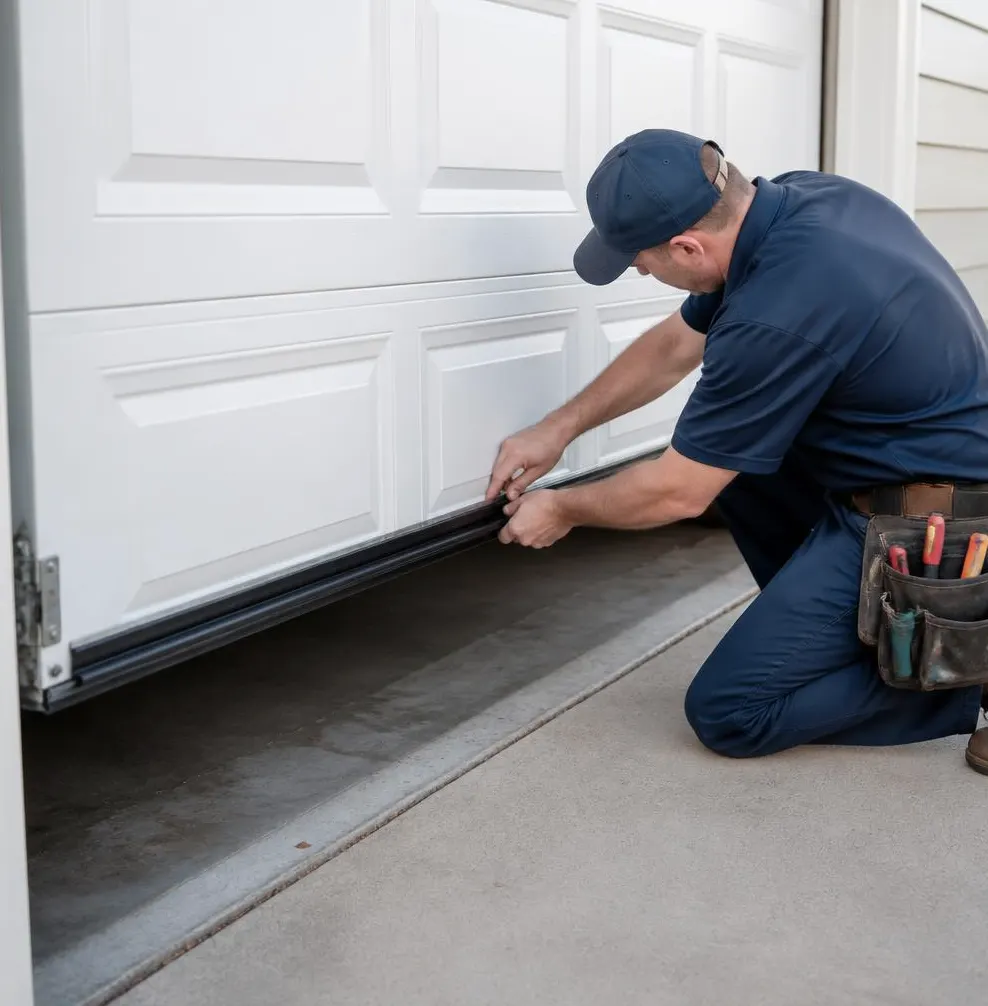
What a Technician Sees on a Typical October Call
Most fall service calls in this area start the same way: the door has been working fine all summer, but the homeowner noticed it sounds a little rougher on cool mornings, or the weatherstripping along the bottom looks flattened and cracked from a summer of heat and humidity. Nothing has failed yet. That's actually the easiest kind of call to make, because a short tune-up now usually prevents the frozen-track, no-open calls that come in January. Once the first hard freeze hits and road salt starts getting tracked into the garage, small issues that were easy to fix in October turn into bigger repairs in the middle of a cold snap.
Why Fall Is the Right Window in This Climate
Lincoln County sees some of the bigger seasonal swings in the state — humid, 90-degree summers followed by icy winters with regular salt and freeze-thaw cycles. That swing is hard on a garage door system. Metal parts expand and contract, rubber seals dry out and crack, and lubricant that worked fine in July can thicken and slow down moving parts once temperatures drop. Doing a full check in the fall, before the first freeze, gives you a chance to catch wear while it's still easy to fix with simple maintenance instead of an emergency repair.
Check the Weatherstripping and Bottom Seal
Walk around the door and look at the rubber seal along the bottom edge and the weatherstripping along the sides and top of the frame. Summer heat makes rubber brittle over time, and by fall it's common to see cracking, flattening, or gaps where the seal has pulled away from the door. A damaged seal lets cold air, moisture, and even mice into the garage, and it's one of the main reasons garages feel noticeably colder once winter sets in. Replacing it is inexpensive and takes very little time compared to dealing with a drafty, icy garage all winter.
Lubricate Moving Parts Before the Cold Sets In
Hinges, rollers, and the torsion spring itself all need lubrication, and fall is the right time to do it. Use a silicone-based garage door lubricant rather than household oil or grease, which can attract dirt and gum up in cold weather. Spray the hinges, the rollers (unless they're sealed/nylon), and the springs, then open and close the door a few times to work it in. Dry, unlubricated hardware is one of the biggest reasons garage doors start grinding or sticking once temperatures drop into the 30s and below.
Check Spring Tension and Hardware
Cold steel behaves differently than warm steel — springs can lose a bit of tension as temperatures fall, which is part of why doors often feel heavier or open more slowly in winter. You don't need to replace springs on a schedule, but it's worth having them checked as part of a fall tune-up, along with the cables, pulleys, and mounting hardware. Look for rust starting to form, especially if the garage tends to stay damp after summer humidity. Loose bolts or worn cable ends are easier to tighten or replace now than to deal with after they fail in freezing weather.
Protect Tracks and Sensors from Ice and Road Salt
Once winter driving starts, salt and slush ride in on tires and boots and end up on the garage floor and lower tracks. Over the season that residue can corrode metal and gum up the track with grit. Before winter really sets in, clean the tracks with a damp cloth and a mild cleaner, then dry them thoroughly — don't lubricate the tracks themselves, just the rollers and hinges. It's also worth wiping down the photo-eye sensors near the floor on each side of the door. Road salt spray and winter grime are a common reason sensors start misreading and the door refuses to close fully once the cold sets in.
Test the Opener, Remote, and Battery Backup
Cold weather is tough on batteries, both in wall-mounted keypads and in any battery backup system built into the opener. Test the remotes and keypad now, and if the opener has a battery backup for power outages — common during ice storms in this area — check that it's holding a charge. It's a lot easier to replace a weak battery in October than to discover it's dead during a winter power outage when you need the door to open.
Think About Insulation If the Garage Stays Cold
If the garage is attached to the house or used as a workspace, an insulated door (or adding insulation panels to an existing non-insulated door) makes a real difference once the big temperature swings hit. It helps keep the space more stable through both the humid summer stretch and the icy winter months, and it reduces condensation issues that can form when warm, moist air meets a cold door surface.
When to Call Troy Garage Door
If the tune-up turns up a cracked seal that's hard to replace cleanly, springs that look worn or unevenly tensioned, or an opener and sensors that aren't responding reliably, that's the point to bring in a technician rather than keep troubleshooting. Troy Garage Door handles seasonal garage door maintenance visits that cover lubrication, hardware inspection, and seal replacement in one trip, and we also offer garage door opener services for anything related to remotes, keypads, or backup batteries that aren't holding up. Catching these things before the first hard freeze means fewer surprises when the weather turns.
If you're in Troy, Moscow Mills, Winfield, Wright City, or anywhere else in Lincoln County and want your garage door checked out before winter, give Troy Garage Door a call — we'll have you ready for the cold before it gets here.